
Aikido
In our training sessions, we often refer to an Eastern martial art: Aikido. Where combat sports focus on ‘disabling an opponent’, Aikido focuses on ‘enlisting a partner’. That makes it a perfect metaphor for the Harvard approach.
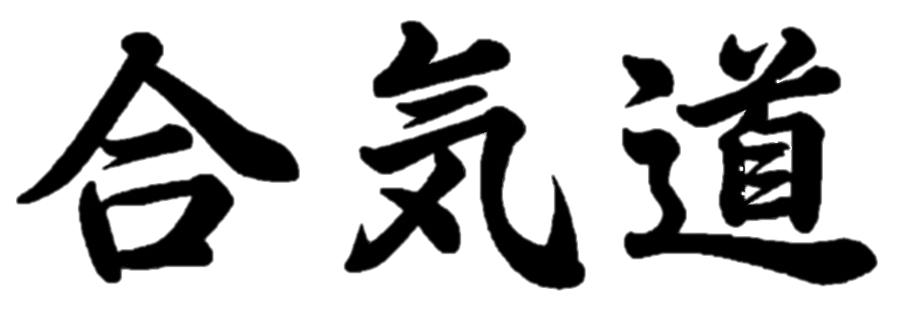
What is Aikido?
In an experiment, people were asked to take turns standing on a narrow plank. Surrounding this plank was a tent, painted with vertical stripes. This tent was being rotated. All the people that participated in the experiment lost their balance and fell off the plank. Next, they asked a number of Aikido practitioners to stand on the plank. None of them fell off: they had developed an inner strength that allowed them to remain upright, straight, and centered.
These days, you see how more and more people find it increasingly difficult to stay upright in an environment that is constantly moving and changing. In stressful and crisis situations, we more often tend to feel threatened and see others as opponents that must be neutralized. Because otherwise, they will neutralize us. Negotiation then becomes “the art of neutralizing the opponent.”
Is there another way? Can we turn it into “engaging a partner” instead? First explore, as allies, if it is possible to “enlarge the cake” together, to only then “divide the cake”? That is precisely what the Harvard approach aims for. But what if the other party doesn’t take you seriously? Puts pressure on you, behaves condescendingly, or plays games with you? Before you know it, you might resort to a fight-or-flight mode again, or you might freeze.
This is where Aikido can help you, by providing a physical experience that bridges the gap between understanding the Harvard approach and actually applying it.
The Aiki Approach is essentially focused on discovering our inner strength. Then you resemble the eye of a hurricane: simultaneously still and that enormous source of strength and dynamism. Then you are no longer the consequence, but the cause. Then you live and work from your center.
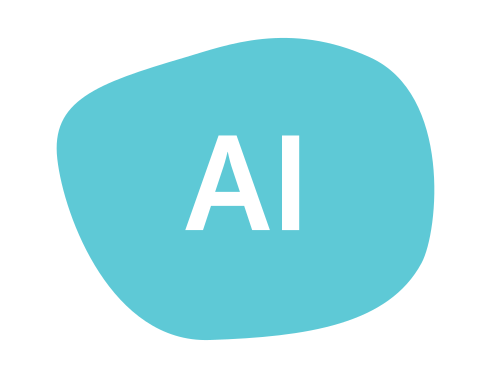
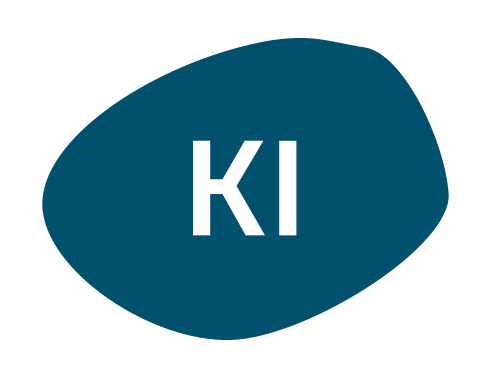
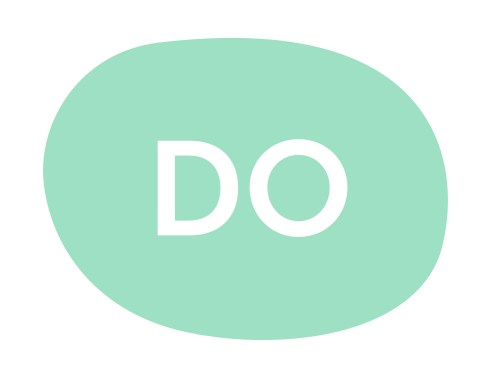
The three syllables of ‘Aikido’ each have their own meaning:
| Meaning, among other things, ‘balance, harmony, and encounter’. |
| Meaning, among other things, ‘life energy, breath power, the essence, the being of a human’. Similar to the Hebrew ‘ruach’ or the Latin ‘spiritus’. |
| Comparable to the Chinese word ‘tao’, the way. |
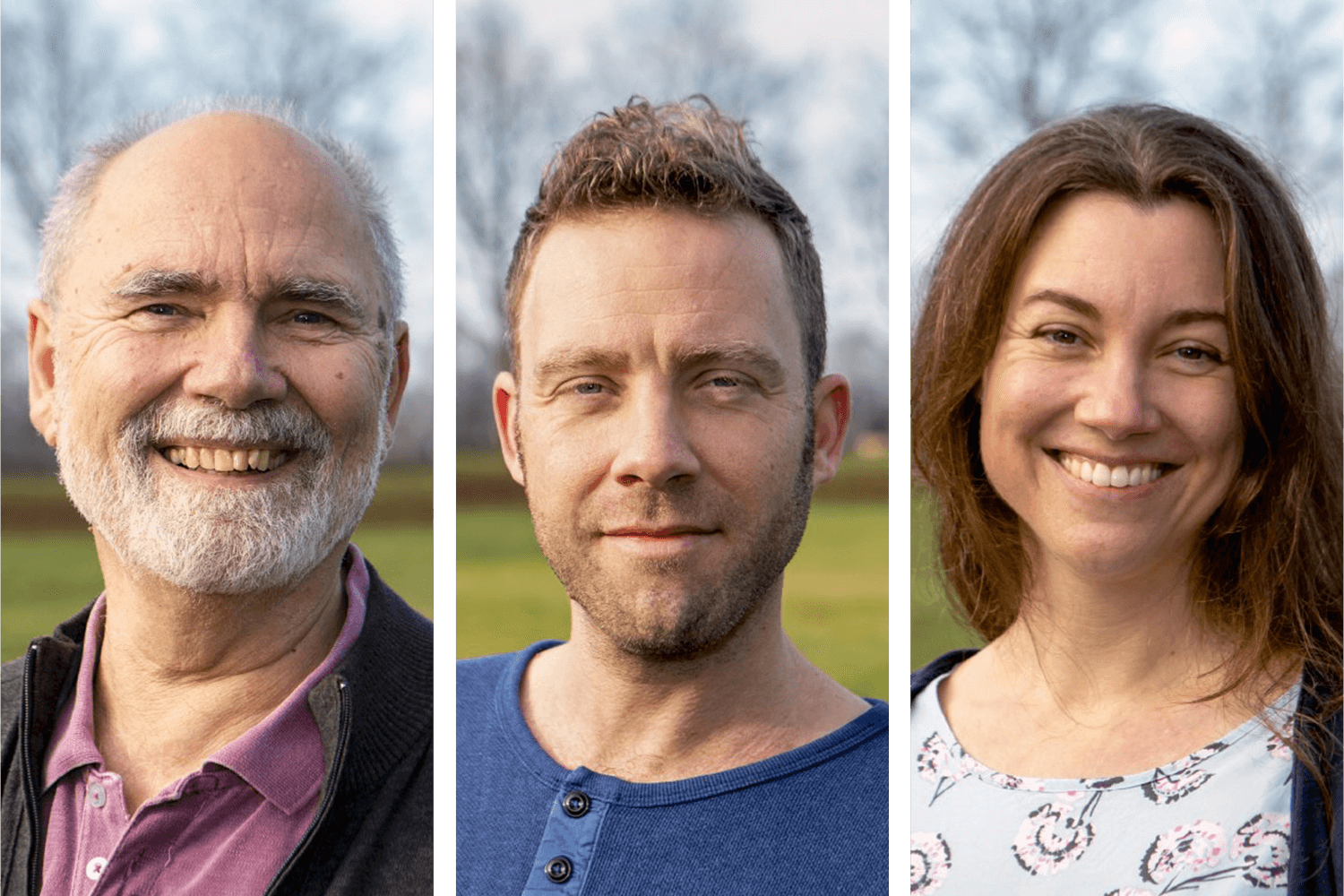
The Aalten family
Al meer dan 50 jaar geeft Aalt Aalten wereldwijd Aiki aanpak trainingen en al decennia ook samen met zijn dochter Daniëlle en zoon Evert. Aalt start een training doorgaans met de volgende openingsvraag: “Ben je bereid om voor de komende paar uur op een andere manier naar de wereld te kijken, dan je misschien gewend bent?”.
Vanuit de fascinatie voor de talloze oefeningen in krijgskunsten, die een geweldige metafoor vormen voor het dagelijks leven als ook voor het bedrijfsleven, ontwikkelde Aalt de Aiki aanpak. Een methode waarbij Aikido principes worden ervaren, zonder daarbij de krijgskunst zelf te beoefenen. Het helpt je om op effectieve wijze kalmte en overzicht te behouden in situaties van stress. Zodat je met aanzienlijk minder inspanning prestaties kunt leveren en een zeer vitale en productieve omgeving creëert.
Aalt studeerde Sociale Wetenschappen en Psychomotorische Therapie in Amsterdam. Vanuit zijn expertise fascineert hij al decennia lang leiders, managers in het bedrijfsleven en topsporters.
Aikido & Mastering the Art of Negotiation
Aikido is an important component of our training “Mastering the Art of Negotiation.” Aalt takes you through his Aiki Approach, which is guaranteed to be a unique and pleasantly confrontational experience. Connecting and moving forward together, the art of enlisting the other, are important elements in that. Through physical exercises, you experience ‘aha moments’ that you carry with you for the rest of your life.
The Aiki approach has been a cornerstone of our training ‘Mastering the Art of Negotiation’ with the Harvard Method for years. The Aiki approach is guaranteed to be a unique and pleasantly confrontational experience. Through the physical exercises, you experience ‘aha moments’ that you carry with you for the rest of your life.
Hugo Crul, RoutsLaeven